Balancing brand heritage and e-commerce performance
When luxury meets digital behaviour, the challenge is not simply to sell online. It is to translate an established brand universe into experiences that respond to how people actually browse, discover and buy today.
Working within the marketing team of a leading French luxury beauty house, I worked at the intersection of UX/UI, digital performance and creative direction. My role was to explore how new e-commerce practices and technologies could be introduced without compromising the brand’s distinctive codes.
As the only UX/UI designer embedded within the marketing team, I often acted as a bridge between marketing teams driven by data and performance, and creative teams protecting a highly established visual identity.
Making product discovery more visual
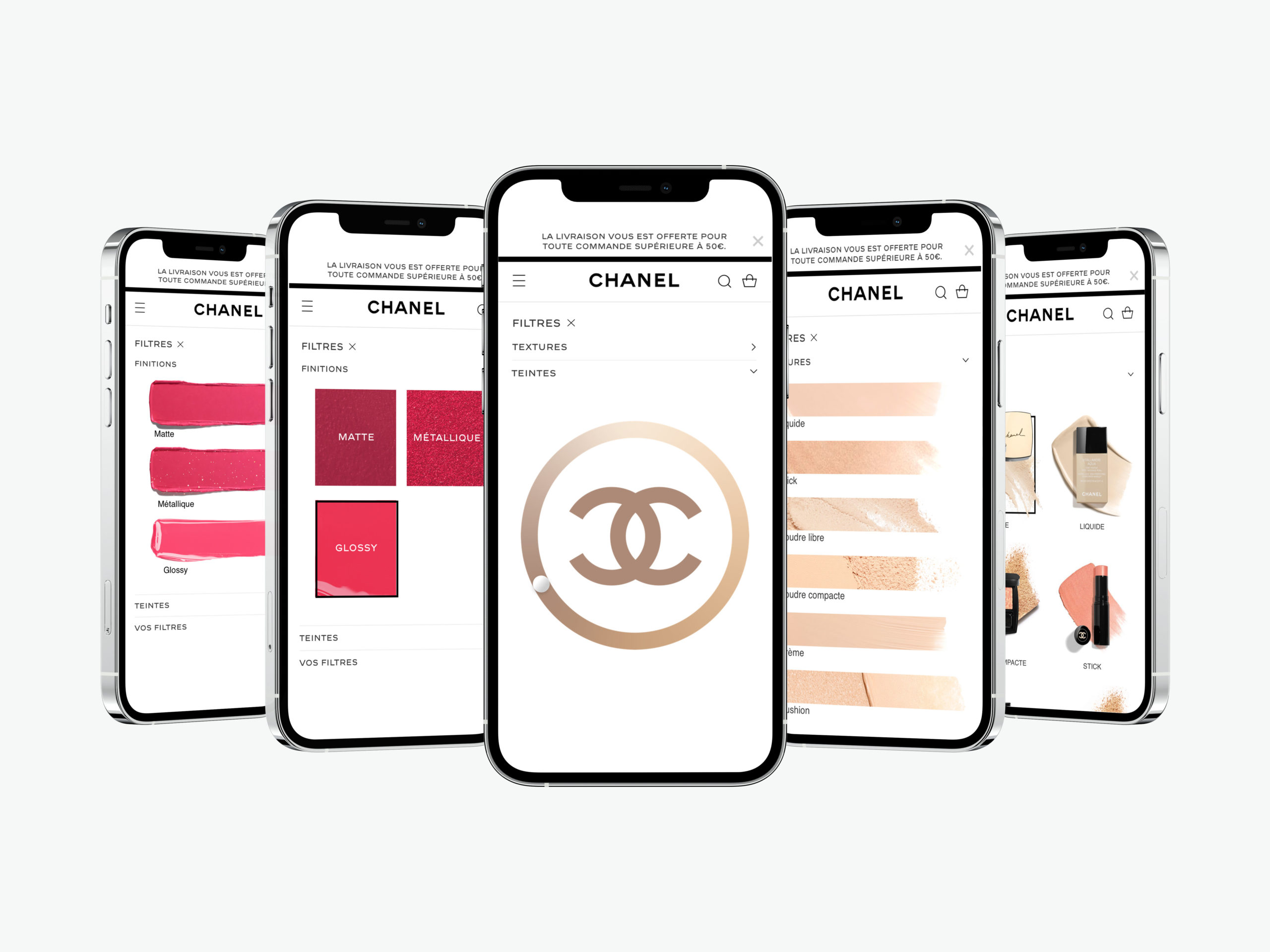
Traditional e-commerce filters tend to prioritise efficiency. For a luxury beauty brand, however, discovery is also part of the experience.
I explored more visual approaches to product filtering, testing ways of integrating packshots and product imagery directly into the navigation experience. The challenge was to create a more immersive interface while keeping interactions lightweight and intuitive, particularly on mobile.
I worked on UI explorations, interaction principles and prototypes to demonstrate how a more editorial approach could coexist with e-commerce functionality.
Bringing the store experience online
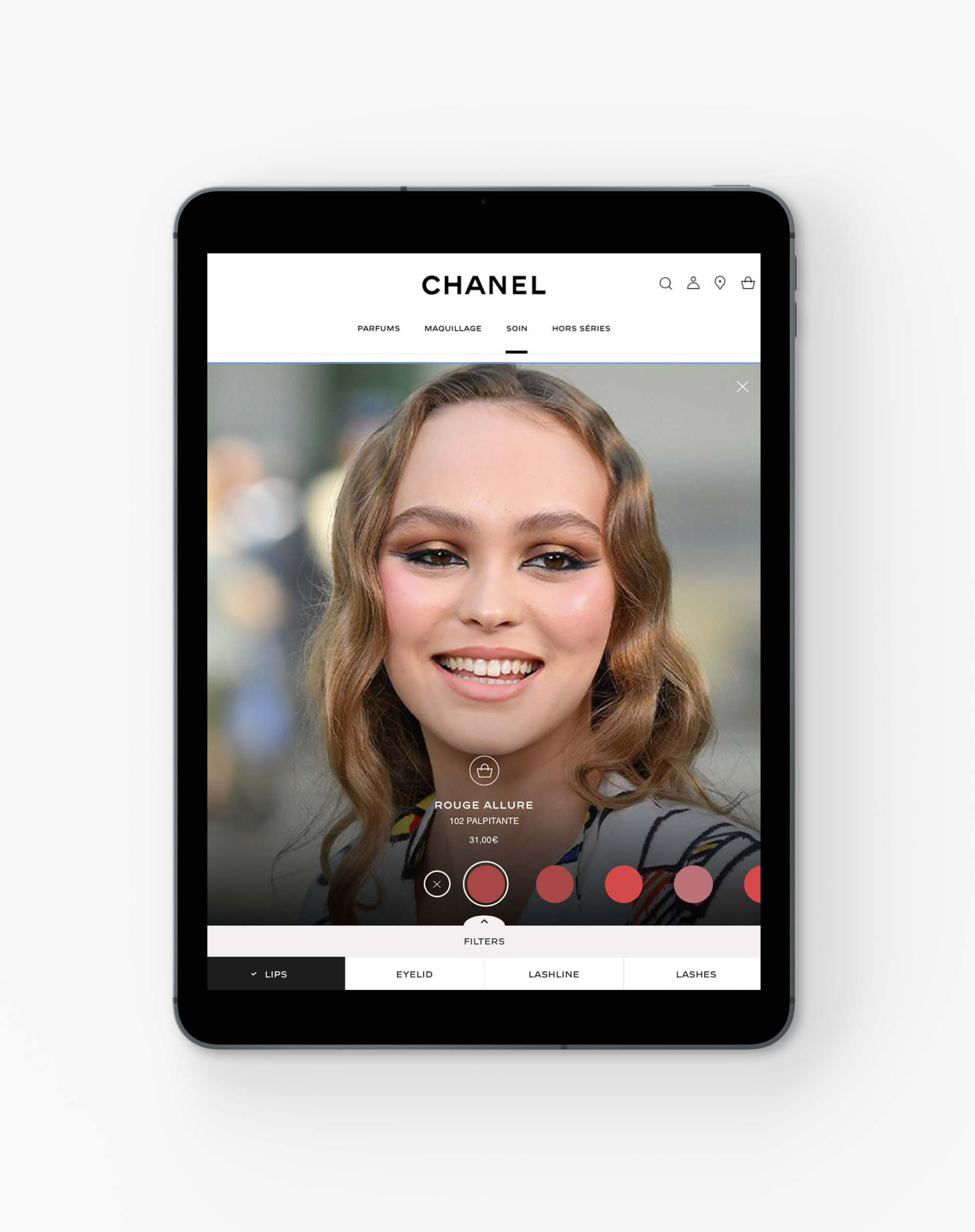
In 2020, virtual try-on was still an emerging technology in beauty e-commerce. The brand was exploring facial recognition to allow customers to virtually test products such as lipsticks and mascaras.
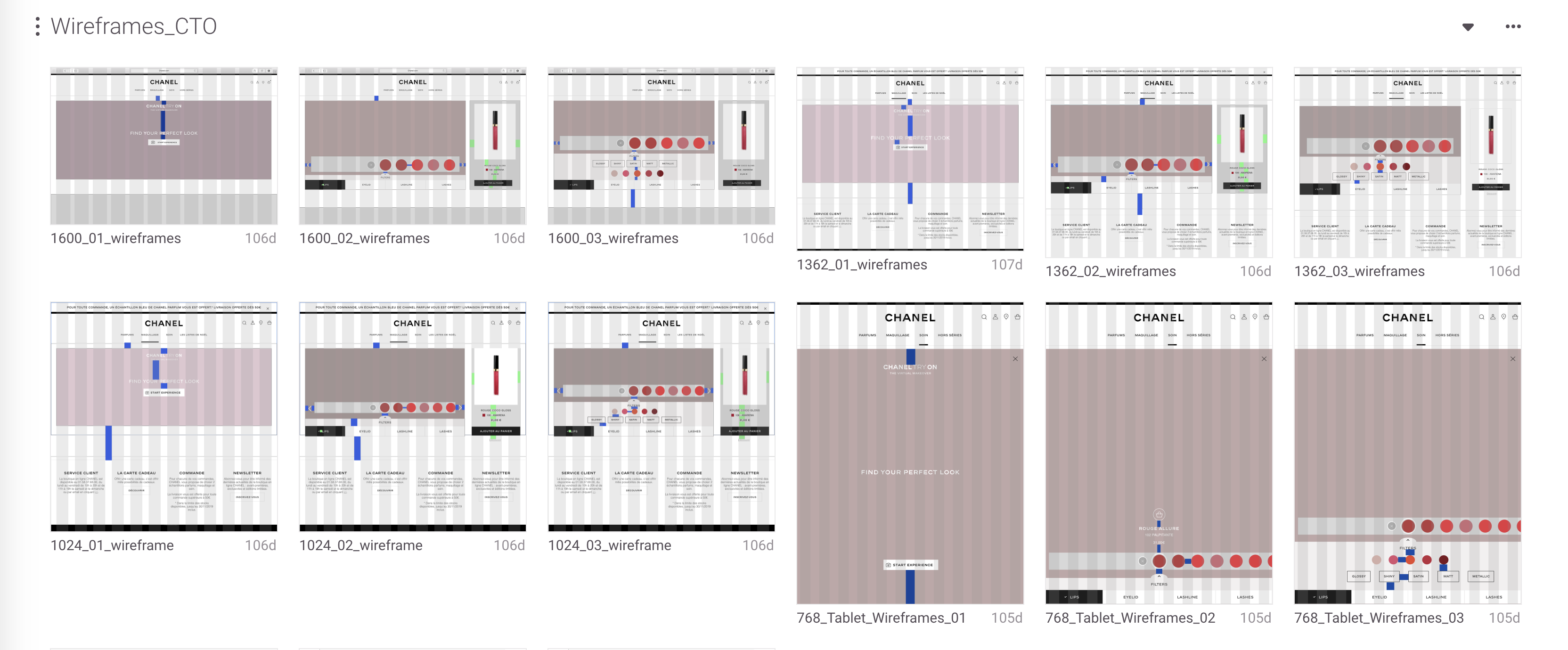
My role was to support the integration of this new experience into the broader digital ecosystem, working on UI adaptations and design variations alongside an external technology partner.
The challenge was not simply technological. It was to make an emerging interaction feel consistent with a highly established luxury environment.
From product catalogue to content experience
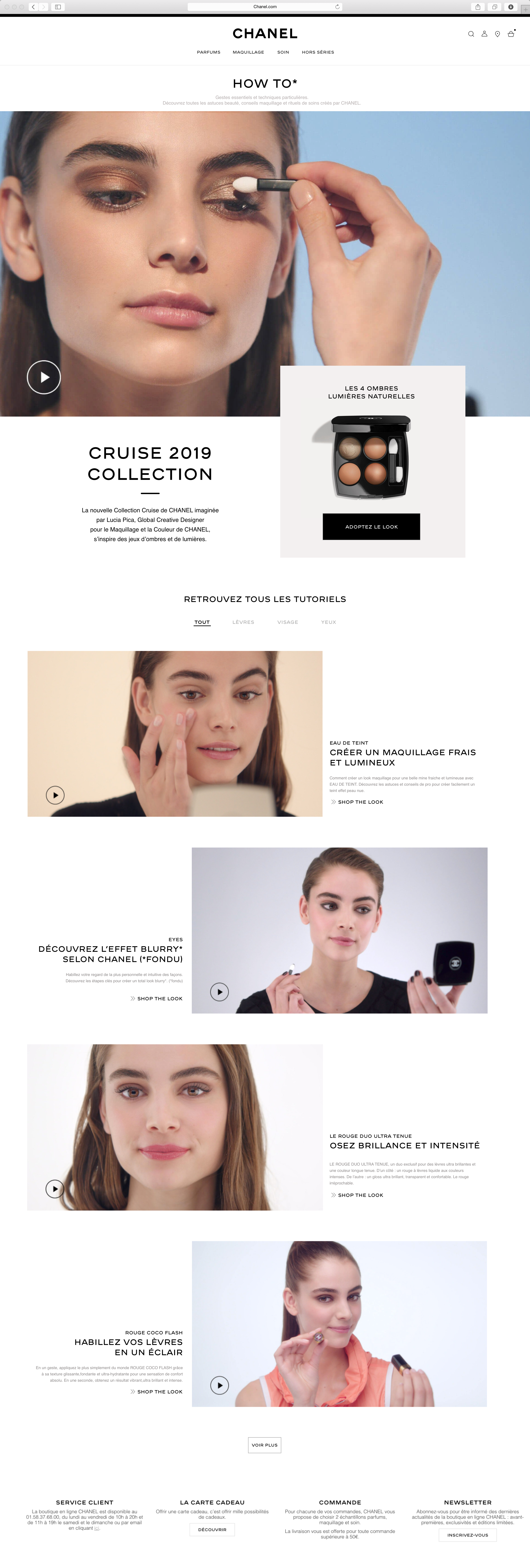
The growing influence of tutorial-driven content was changing how younger audiences discovered beauty products. The marketing team wanted to give makeup tutorials a stronger role within the e-commerce experience.
I worked on UX/UI explorations for redesigned tutorial pages, looking at how editorial content, inspiration and product discovery could coexist within the same experience.
The objective was to move beyond a purely transactional catalogue and create a digital environment where discovery, content and commerce could naturally connect.
My role was ultimately less about choosing between brand and performance than finding ways for both to coexist.
Data could reveal how people were using the platform, but design was needed to translate those insights into experiences that still felt unmistakably part of the brand.
This project reinforced my belief that luxury digital design is not about adding more features. It is about knowing which behaviours to support, which technologies to embrace and how to integrate them without losing the character of the brand.
This experience broadened my approach to digital design. Moving from a creative-led environment into a marketing and e-commerce team gave me a much stronger understanding of data, performance and user behaviour.
It also gave me the opportunity to work within the highly distinctive visual codes of an iconic luxury house, and to understand how deeply established brand principles can shape every aspect of a digital experience.
It was an important step towards the multidisciplinary approach I bring to UX/UI and creative direction today.