An art-based workshop with a primary school class
As part of my ongoing research into therapeutic and educational uses of artistic practices, I designed a two-hour painting and storytelling workshop with a CM1 class (9–10-year-olds), as part of a school project exploring empathy and emotional awareness.
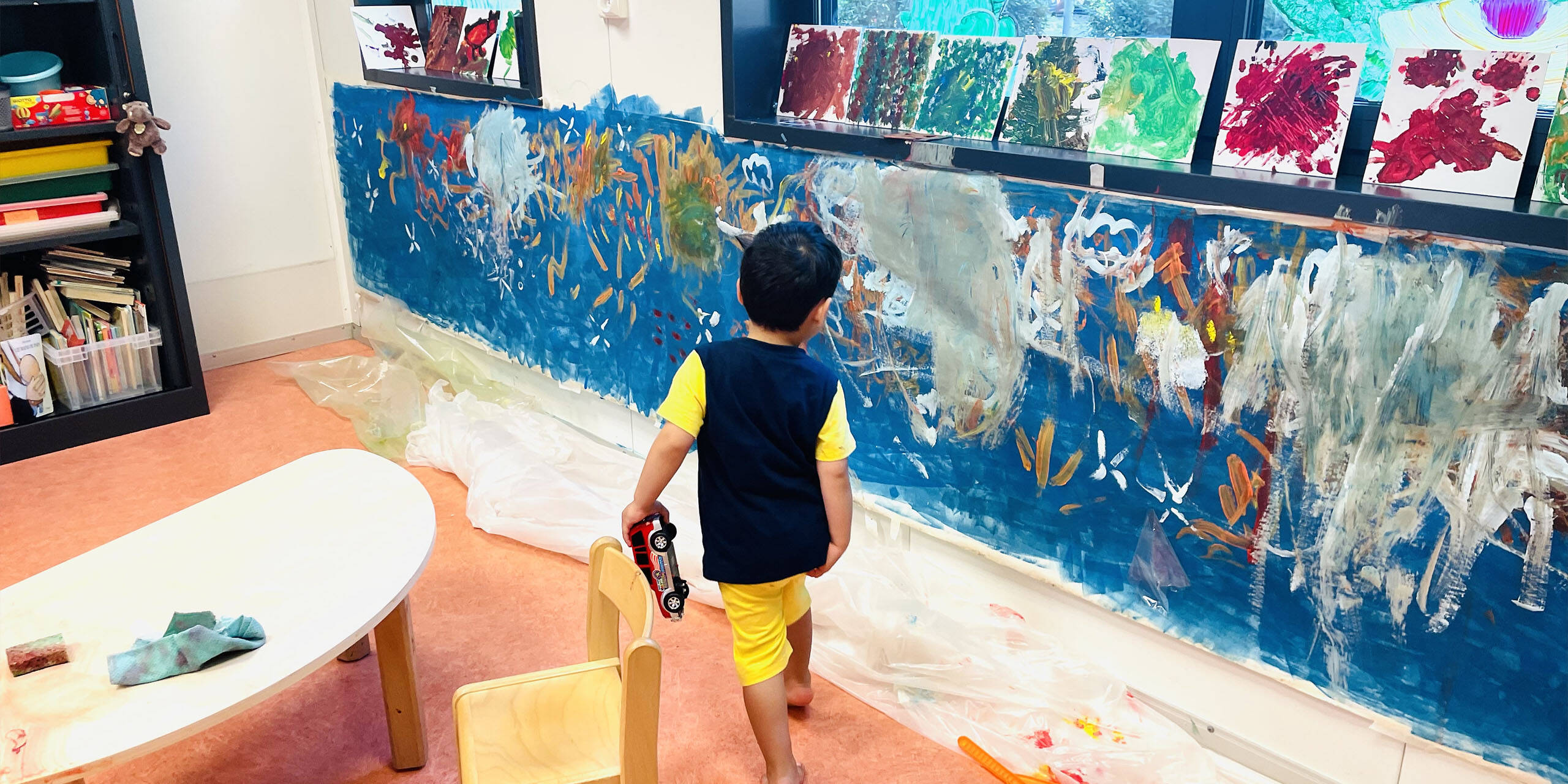
Each student took turns reading an excerpt from a story written by the class, while the others translated what they felt into an abstract painting. The exercise created a space to explore how differently the same story can be perceived and experienced.
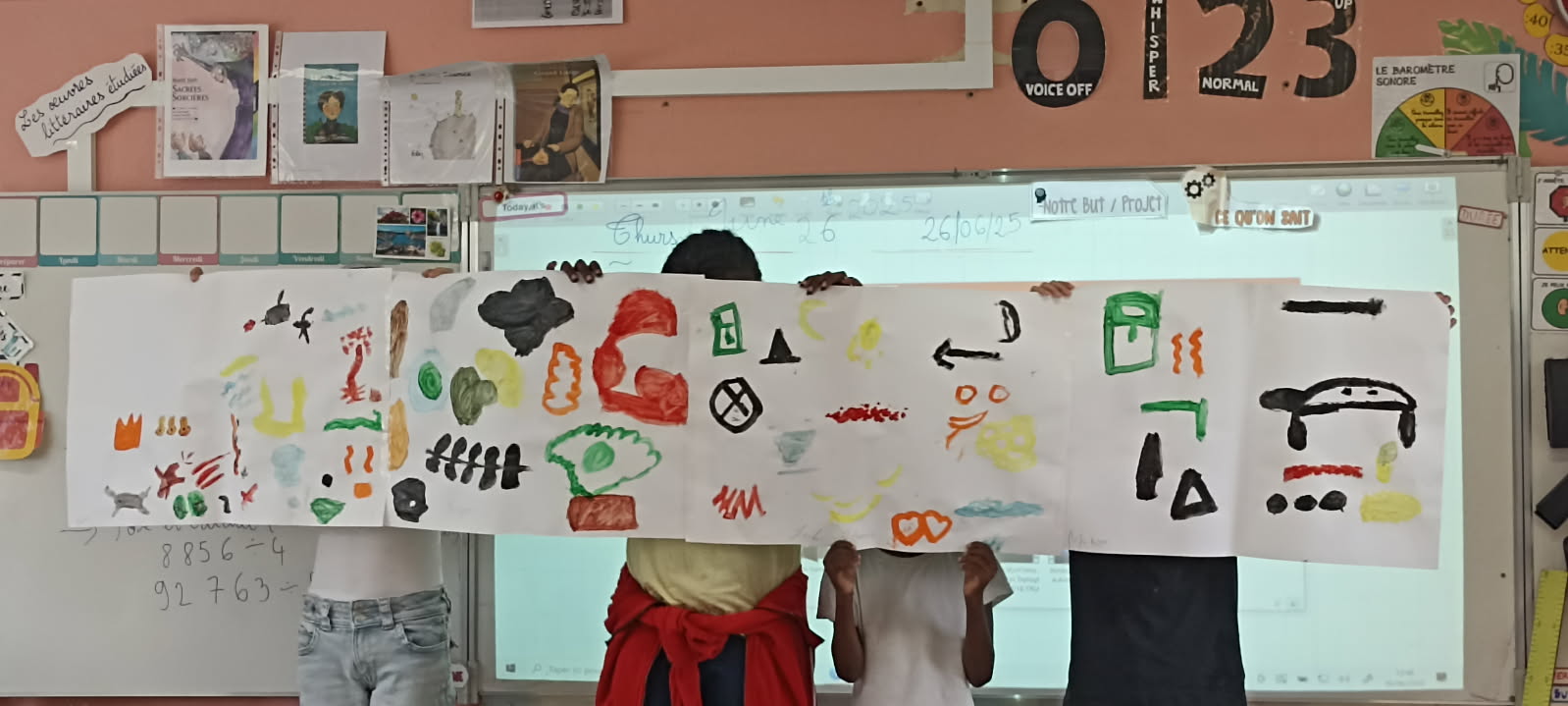
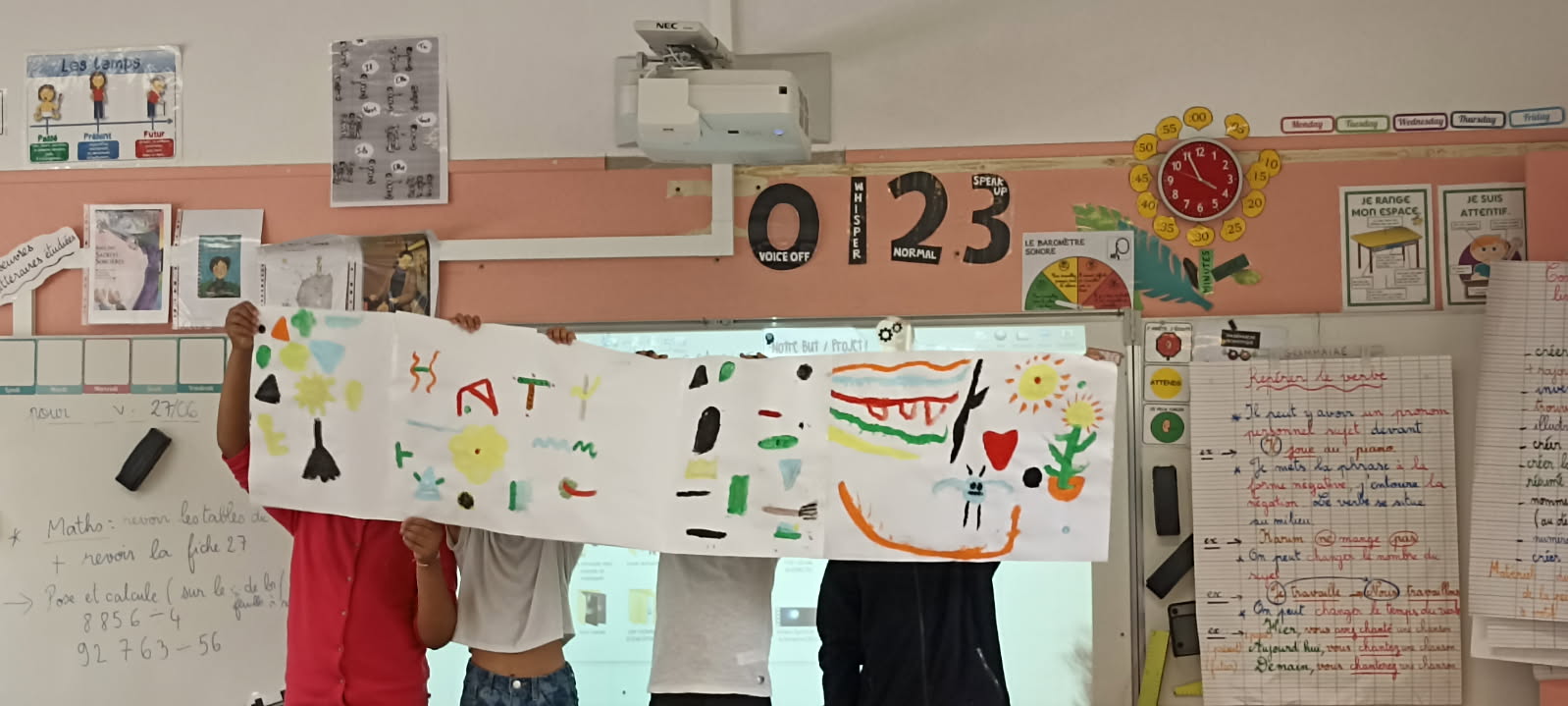
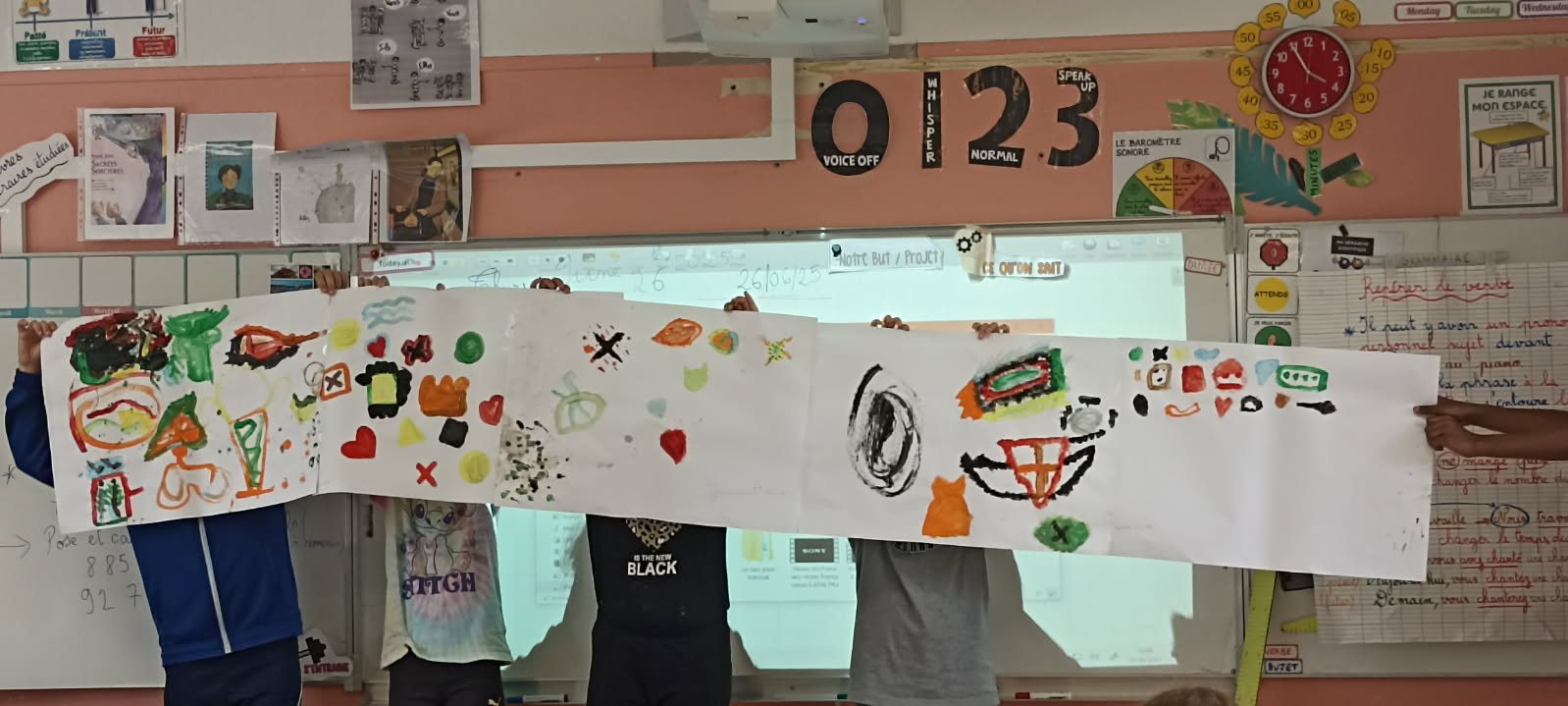
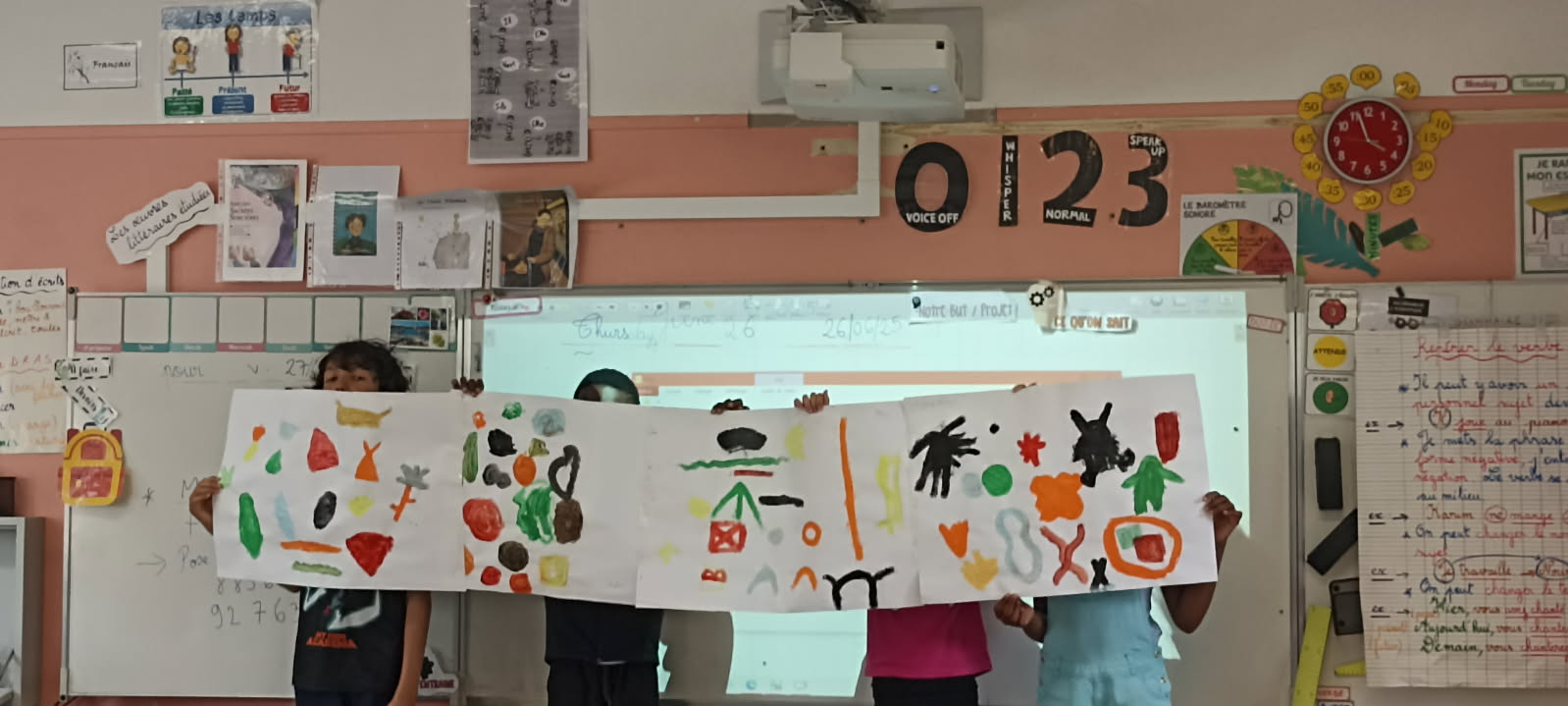
We ended with a discussion about their feelings and interpretations. The individual paintings were later assembled by the class into a collective mural, bringing together their different perspectives in a shared visual work.
What interested me most was the role of art as a third element in the process. A simple creative exercise became a way to make emotions visible, acknowledge different perceptions and explore empathy through making.
The painting creates an initial space for individual expression and introspection, but it also provides a tangible starting point for conversation. Once the images are there, talking about feelings becomes easier—even for children who may not spontaneously put these experiences into words.
The individual works then become a shared object of discussion, allowing different perceptions and emotions to coexist without requiring anyone to be right or wrong. In this sense, the artistic medium can act as a bridge between individual experience and collective dialogue.
This experience also echoes my broader research into art therapy and artistic mediation: how can creative practices create the conditions for expression, connection and dialogue?